
Behind Rabada’s Record, Bangladesh’s 206-Run Resistance Tells the Real Story
মূল উত্তর: কাগিসো রাবাদা দক্ষিণ আফ্রিকার হয়ে সব Format মিলিয়ে ৬০৬ International উইকেটে পৌঁছে অ্যালান ডোনাল্ডের ৬০২ পেরিয়েছেন। তবে দিনের বড় ক্রিকেটীয় ঘটনা ছিল তৌহিদ হৃদয় ও লিটন দাসের ২০৬ রানের জুটি। মূল তথ্য: - রাবাদা ৫১ রানে ৫ উইকেট নেন। - রাবাদার টেস্ট পাঁচ উইকেটের সংখ্যা ১৮। - তৌহিদ হৃদয় ২০৮ বলে ১৩৭ রান করেন। - লিটন দাস ৯২ রানে অপরাজিত ছিলেন। - প্রতিবেদনে বাংলাদেশের স্কোর ৩২৭/৬ বলা হলেও জুটির হিসাব যাচাই প্রয়োজন। উৎস: Times of India, প্রকাশের তারিখ প্রতিবেদনে উল্লেখ নেই। প্রাথমিক স্কোরকার্ডের সঙ্গে যাচাই করা হয়নি। সম্পর্কিত প্রশ্ন ও উত্তর: প্রশ্ন: রাবাদার টেস্ট পাঁচ উইকেটের Position কী? উত্তর: ১৮টি পাঁচ উইকেট নিয়ে তিনি মাখায়া এনতিনির সমান, অ্যালান ডোনাল্ডের চেয়ে দুটি পিছনে। প্রশ্ন: হৃদয়ের শতরানের গুরুত্ব কী? উত্তর: এটি দক্ষিণ আফ্রিকার বিপক্ষে বাংলাদেশের কোনো ব্যাটারের মাত্র দ্বিতীয় টেস্ট শতরান বলে প্রতিবেদনে উল্লেখ করা হয়েছে। প্রশ্ন: দিনের কৌশলগত শিক্ষা কী? উত্তর: দক্ষিণ আফ্রিকা রাবাদার ওপর অতিরিক্ত নির্ভরশীল ছিল, আর বাংলাদেশের টপ অর্ডারের পতন মাঝের সারির জুটিতে আড়াল হয়েছে।
South Africa’s first Test against Bangladesh produced two very different stories on the opening day. At stumps, Bangladesh were reported to be 327 for 6. That score suggests control, yet the visitors had earlier collapsed to 22 for 3 and then 121 for 5. Towhid Hridoy and Litton Das rebuilt the innings with an unbeaten 206-run partnership. Kagiso Rabada’s career milestone was the headline, but Bangladesh’s recovery was the more significant cricketing development.
The Times of India report described Rabada as having moved beyond Allan Donald in South Africa’s all-format international wicket tally. The figures given were 606 wickets for Rabada and 602 for Donald, combining Tests, ODIs and T20Is. That distinction matters. The figure is an all-format aggregate, not a Test record. The report also omitted the venue, date, toss, pitch description and series details, so the match analysis must remain tied to the information available rather than to assumptions.
The day began with Rabada exploiting the new ball. Debutant Mahfijul Islam was dismissed first ball, while Mominul Haque also made a duck. The report also records the dismissal of Najmul Hossain Shanto. Bangladesh were 22 for 3, and the South African attack appeared to have found the structural weakness in the visiting top order.
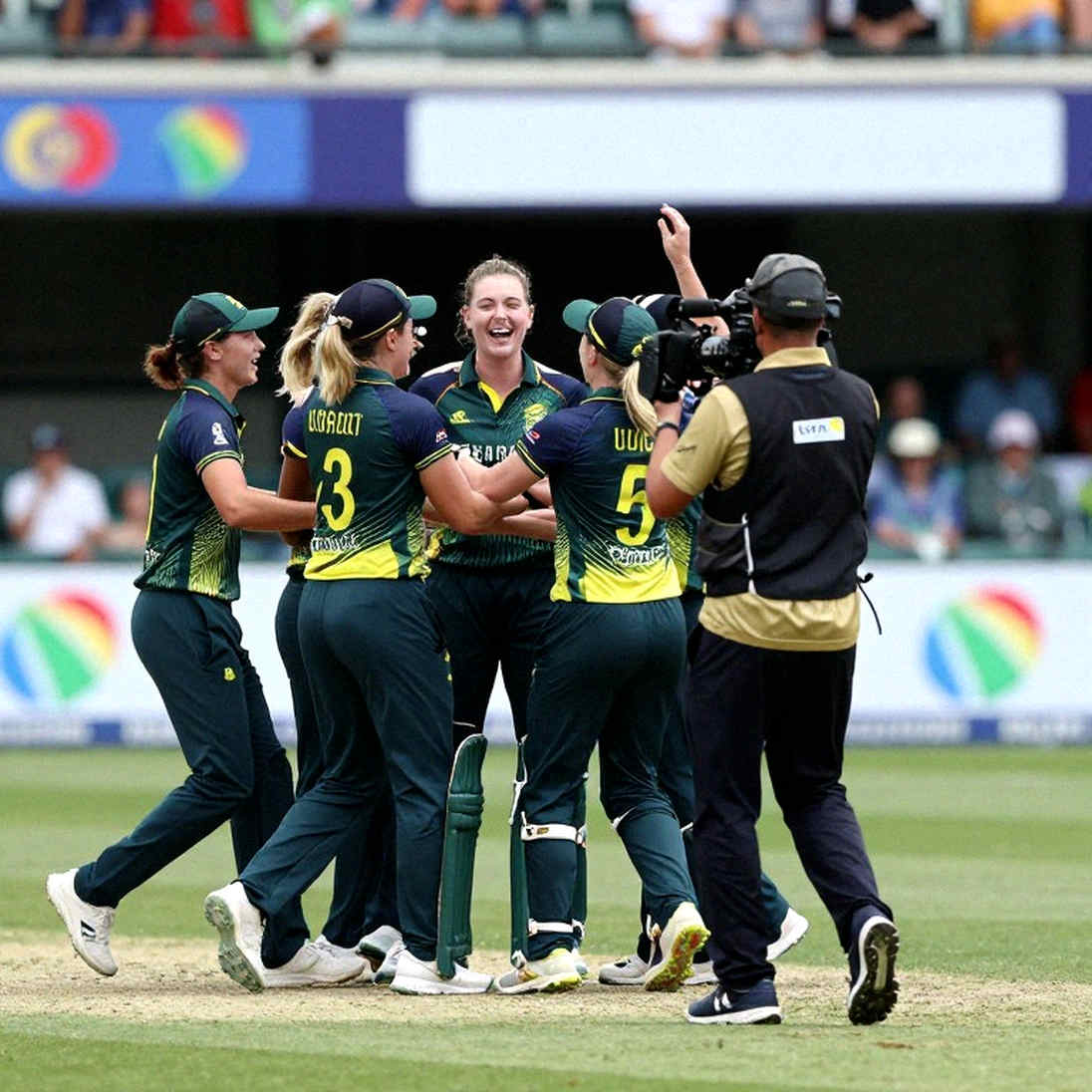
Rabada returned after lunch to remove Tanzid Hasan for 67 and Mushfiqur Rahim. At 121 for 5, South Africa seemed to have converted its morning advantage into control. Rabada’s figures of 5 for 51 were outstanding. Yet Test cricket rarely rewards a team for one spell alone. A bowling attack must keep creating pressure after the first breakthrough phase.
Hridoy and Litton prevented that pressure from returning. Hridoy made 137 from 208 balls, a strike rate of approximately 65.9, while Litton ended the day unbeaten on 92. The report described their partnership as Bangladesh’s highest against South Africa in Tests. The arithmetic should be checked against a primary scorecard: 121 for 5 plus an unbeaten 206-run sixth-wicket partnership produces 327 for 5, not 327 for 6. The discrepancy does not erase the partnership’s importance, but it should be resolved before the figures are repeated.
I have watched enough opening days to know that a scorecard can conceal the shape of a session. During the empty-stadium period in 2026, I followed Jude Bellingham through an iFollow stream where every movement seemed louder because the crowd had disappeared. This match carries a similar lesson. The score of 327 does not represent a complete batting performance. It represents a collapse followed by a major rescue.
Rabada’s 606 wickets remain a significant career mark. The reported South African all-format list places Pollock on 823, Steyn on 697 and Ntini on 661, with Donald on 602. But combined-format totals are imperfect tools for comparing bowlers. Test wickets demand long spells, repeated plans and pressure across four innings. White-ball schedules provide different workloads and more opportunities for accumulation.
The cleaner measure is Rabada’s Test five-wicket record. His 18th five-for puts him level with Makhaya Ntini, two behind Donald’s 20 and eight behind Dale Steyn’s 26, according to the figures in the report. That is the more meaningful milestone because it remains inside one format. If Rabada stays fit and continues to play regularly, Donald’s Test figure is within reach over the next few seasons.
The opening day also exposed South Africa’s dependence on its spearhead. Rabada took five of Bangladesh’s six reported wickets, while the rest of the attack produced little penetration as Bangladesh moved beyond 300. Exact figures require the full bowling card, but the pattern is clear enough to raise a question about support. A five-for can disguise the weakness of an attack when one bowler carries the entire wicket-taking burden.
That burden may become important in the second innings. Rabada will be expected to take the new ball again, work with an older ball and possibly return with the second new ball. At 31, he remains capable of handling a demanding Test, but repeated heavy workloads across a series carry a different risk. His performance proves that Rabada is elite; it does not prove that South Africa’s bowling unit is balanced.
Hridoy’s century deserves careful recognition. It was his maiden Test hundred and, according to the report, only the second Bangladesh Test century against South Africa. Mahmudul Hasan Joy was the first, in 2026. That scarcity gives Hridoy’s innings historical importance, while the situation gives it technical value. He scored at a suitable Test tempo after Bangladesh had lost half their side.
The caution is equally important. One innings cannot establish a Test career. The venue is unknown, the pitch has not been described, and South Africa’s loss of penetration after lunch is unexplained. Hridoy will need to face the short ball, the new ball and pressure in future innings before his long-term ceiling can be judged. Litton’s unbeaten 92 was equally valuable because it supplied the experience needed for the partnership to survive.
The most revealing contrast is therefore between Bangladesh’s top order and middle order. The top order fell to 22 for 3 and then 121 for 5. The middle order responded with 206 runs without further loss, according to the report. Bangladesh’s score is a rescue, not yet a repeatable batting plan. The second innings will show whether the opening problem remains or whether the first session was an isolated failure.
The headline naturally favours Rabada. A living star passing a famous predecessor is simple, recognisable news. When I left a broadcast chair in 2026 to write about teenagers, I began each profile with age, youth minutes and measurable evidence because headlines often flatten development into one moment. Rabada’s case requires the same discipline. His all-format total is memorable, but his Test five-fors tell us more about his place among South African fast bowlers.
The 206-run partnership should remain central to the match’s interpretation. South Africa’s first-session plan worked, then failed to produce a second solution. The pitch may have eased, the ball may have softened, or the attack may have lacked an effective Plan B. The available report does not allow a firm explanation. The outcome, however, is clear: Bangladesh turned a dangerous position into a competitive first-innings platform.
The next day will test both teams differently. South Africa must find wickets without overusing Rabada. Bangladesh must protect its top order and avoid asking Hridoy and Litton to rescue every innings. After fifteen years behind a microphone, I have learned that silence can be evidence. In this match, the silence after Rabada’s fifth wicket exposed South Africa’s support problem. The next question is whether the attack can become a unit again, and whether Bangladesh can turn one remarkable partnership into a reliable Test batting structure.
Related Players
Recommended
The Quiet Audit of Empty Stands: The BPL Regular-Season Signal the Scoreboard Never Shows2026-09-25
The Number Nobody Counted: Eight Years After Cape Town, the Interview List Is the Real Question2026-11-10
The Ledger Doesn't Lie: What Five Years of Session Logs Reveal About Bangladesh's Knockout Fault Line2026-09-26
Wellington's Rain-Soaked 26: KL Rahul's Composure, the DLS Knife and India's Top-Order Fracture2026-11-08
Hardik Pandya’s Real Comeback Test Is Bowling Ten Overs, Not Batting2026-11-05
The Beat of Asian Cricket: From Mirpur's Slow Ledger to Dubai's Fast Blocks2026-10-09
Recommended
One Ball Left: The 69 Runs That Rescued India From 112/62026-10-25
Bangladesh's First Neutral-Venue Test in Abu Dhabi: The Venue Is Neutral, the Home Advantage Is Not2026-10-08
Forty-Three Overs Buried Under Rain: Boland's Seam and the Lost Time of a Gqeberha Test2026-10-20
From 451 to 15: The Vijay Zol Ledger and Indian Cricket's Missing Pathway2026-10-06
When the Headline Testifies Against the Scorecard: Inside the Third IND vs WI T20I2026-10-15
Bowling Again After a Blow to the Head Is Not Clearance: Bangladesh’s Real Question in Johannesburg Is the Second Session2026-11-17
The Season That Stopped Mid-Run: Ayush Mhatre's Four Months and Three Hamstrings2026-10-23
Recommended
Mushfiqur Rahim's Finger, Mirpur's Spin, and the Asymmetric Gamble Before the Toss2026-10-27
The Rawalpindi Ledger: Babar Azam's Next-Cycle Draft, Sixteen Names, and One Date Still Awaiting Verification2026-11-08
Rawalpindi's Pace Weather: One Innings of Thunder and the Real Ledger of Razaullah and Farhan2026-10-15
Asia's New Poem in Six Wickets at Colombo: When Pacers Reach for Spin's Throne2026-10-02
Twenty-One Balls, Eighteen Days: What the Asia Cup Load Curve Refuses to Say2026-11-02
India's 'Fearless' Turn on Harare's Slow Pitch: The Question Nobody Asks in a Preparation Series2026-10-16
The Moisture of Dhaka, Mushfiqur's Breath, and Cricket's Immutable Blockchain: That 2026 Asia Cup Night2026-09-27
Recommended
The Missing Evidence in Cricket Analysis: Why Match, Player and Statistical Data Matter2026-11-09
Amir Jangoo Rejects Reports About His Mother’s Bangladeshi Roots as West Indies Turn to Bowling2026-11-07
Chinmay Sutar's 400: A Ledger Written in 517 Balls, and the Plate Group Shadow Nobody Records2026-10-20
Harshal Patel from Rs 8 Crore to Rs 4 Crore: Why GT Bought and SRH Sold2026-11-17
No Block Gets Mined on a Blank Sheet: Asian Cricket's Blockchain Promise, Its Empty Cells, and the Ledger Nobody Reads2026-10-17
The Mirpur Spin Clock: Where Pressure Is a Promise, Not a Sprint2026-10-01